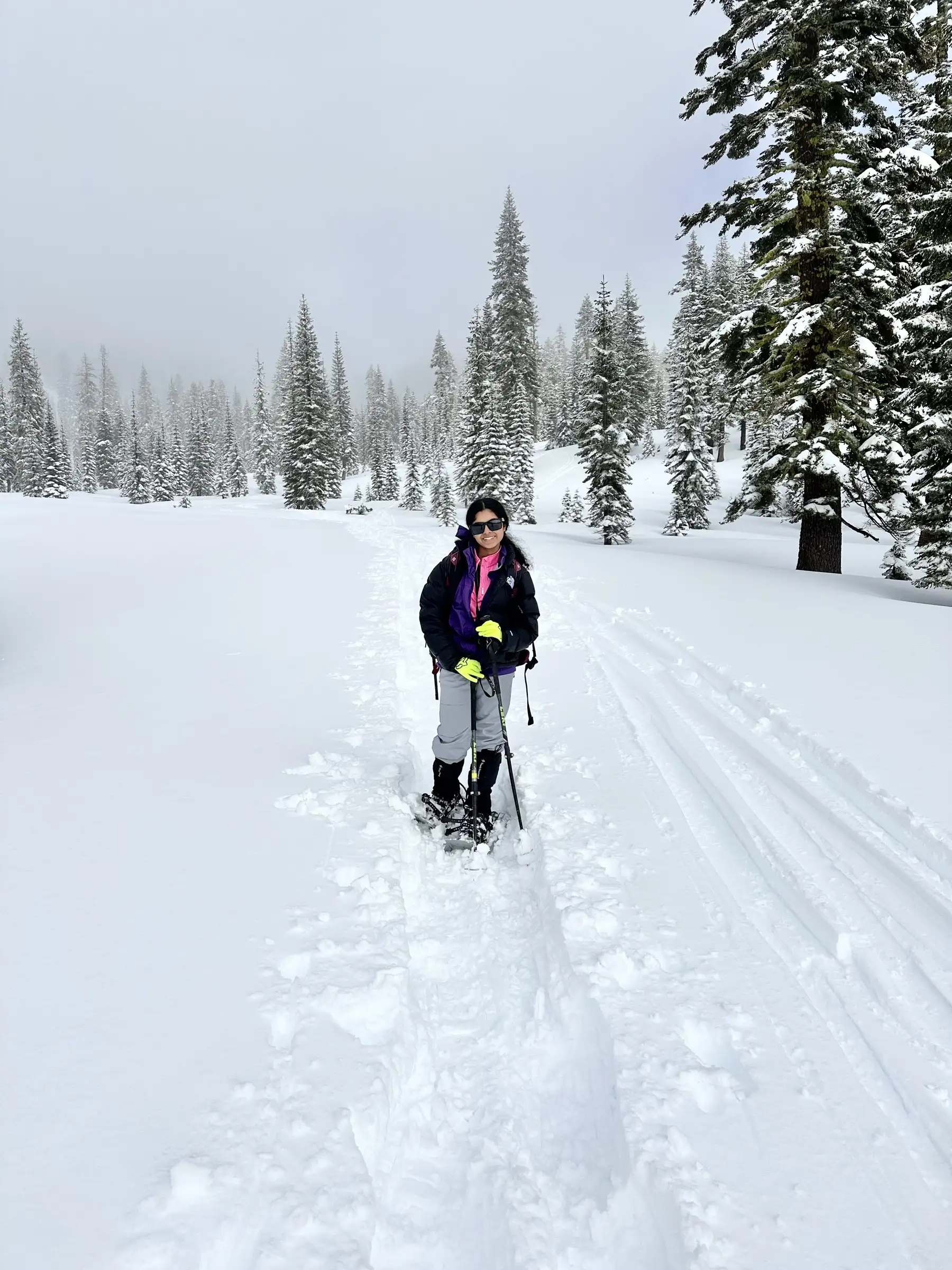
Two days near Mount Shasta learning crampons, ice axes, self-arrest and avalanche rescue, ending with a timed mock rescue and an AA1 Level 1 certification.
Considering the fact that I spend so much time outdoors, I started to realize early this year how important it is to have learned the skills necessary for basic avalanche survival and rescue, as well as practicing self-arrest techniques and various crampon techniques. As I hope to attempt some more challenging climbs, (many of which are in snowy settings), as I grow older and more experienced, I realize that the skills covered in these two clinics are extremely important.
Over Martin Luther King weekend, my Dad and I flew out to North California to participate in these two clinics. We then drove a few hours to an area near Mount Shasta, where we met with our first guide, Beck, who would lead us through the Ice Climbing clinic. Beck is an experienced guide, employed with SWS Mountain Guides, which is the company we chose to work with for these clinics. My Dad had previous experience with this company several years ago, and therefore, we felt like it was a reputable and well-regarded company to work with.
In the first hour of our clinic, Beck taught us some of the basics, like how to use crampons. We learned how to properly strap on crampons to our boots, how to take them off, and how to adjust them. Beck also taught us about the anatomy of an ice axe and how to wield it effectively. She explained the different parts of the ice axe: such as the shaft, pick, head, etc. While these are both basic tools, they are often considered the backbone of ice climbing.
Now that we had some basic knowledge of these tools, Beck took us outside to practice using them in snowy and icy conditions. While we originally planned to drive out to Mount Shasta, the conditions of the day were slightly hazardous, and we ended up completing the rest of the clinic in an icy field of snow in the town of Mount Shasta. This change in location was because of several reasons: a significant amount of snow had fallen the night before, it was very windy, and it was still snowing quite heavily.
Beck first, taught us about several climbing techniques. We learnt about the American, German, and French techniques, otherwise known as flat-footing and frontpointing. We learnt more about which steps were more effective and which techniques should be employed in certain situations. We practiced this several times over the course of the clinic on a steep, inclined hill near the field.
Beck then had us practice glissading. Glissading, in simple terms, is a controlled slide down a snow or ice covered steep slope. If done correctly, glissading is an effective way for mountaineers to quickly descend down a mountain. Our previous experience and instruction with ice-axes was crucial here, as glissading requires using an ice axe to regulate speed and stop when necessary. This technique is known as self-arrest, which is a critical skill that all mountaineers must learn if they intend to glissade safely. This involves rotating the axe in various ways (depending on the way you are glissading) and then driving it into the snow firmly to control your slide.
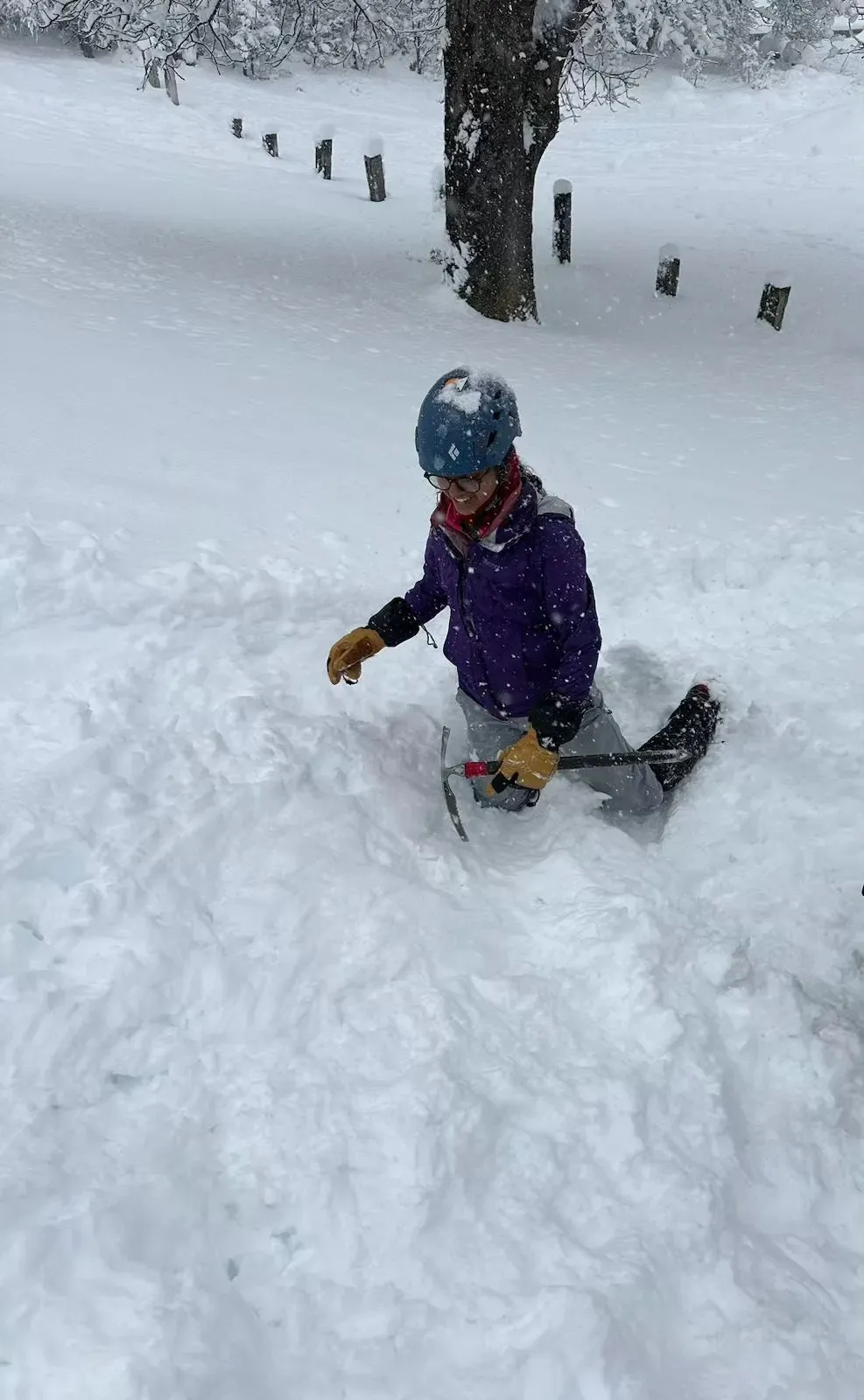
Beck started by pulling us down the hill and then letting go once we gained enough momentum. We did this multiple times, in all sorts of positions: upside down, on our backs, and on our stomachs. We would then learn a corresponding self-arrest technique, and practice it multiple times until we were effectively able to stop our slide. We ended up using many of these newly-acquired skills on our second day, during our Avalanche Rescue Clinic.
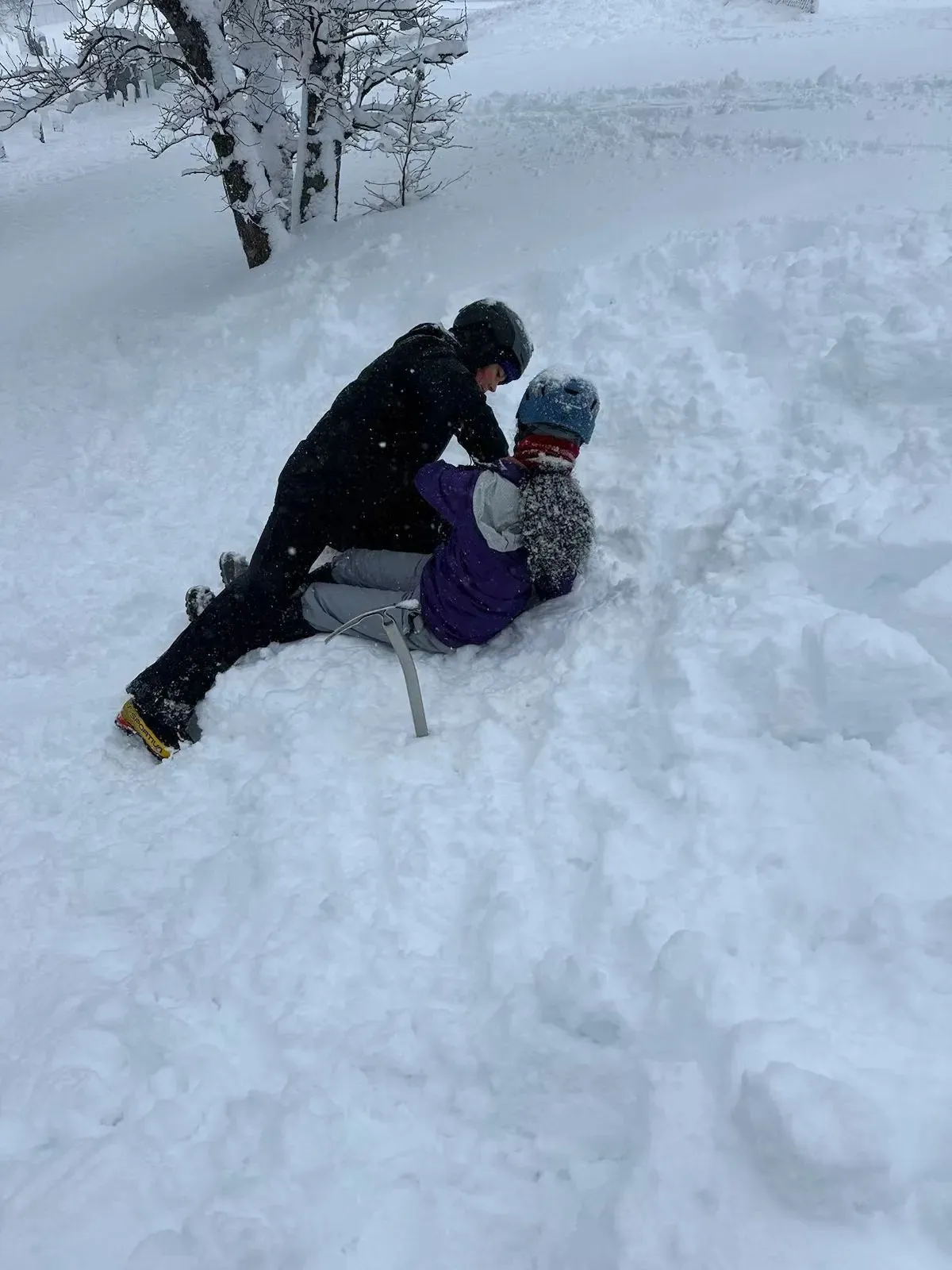 Here you can see Beck and I practicing in the fresh snow.
We began our second day indoors as well, but this time, learning about simple skills such as avalanche rescue principles, equipment care and applications, the rescue process, and basic care for avalanche victims. We did this with our second guide, Caleb, also employed by SWS Mountain Guides.
I found the segment on basic avalanche victim care to be the most interesting. Caleb explained the medical aspects of avalanche rescue, such as hypothermia, (and how to manage it), asphyxia, trauma assessment, and more. These are areas I had never learned about before, but extremely important in real life situations.
After around two hours indoors, Caleb, my Dad, and I, headed outside to get some hands-on experience. As the weather had settled down significantly, we headed to a field just below Mount Shasta, typically popular for snowboarding and skiing.
The foot of fresh snow from the day before was perfect and made avalanche conditions slightly more realistic. Therefore, we began by practicing with common avalanche tools like beacons and probes. These are two very common devices which are used when it comes to avalanche rescue, both used to find victims buried under the snow.
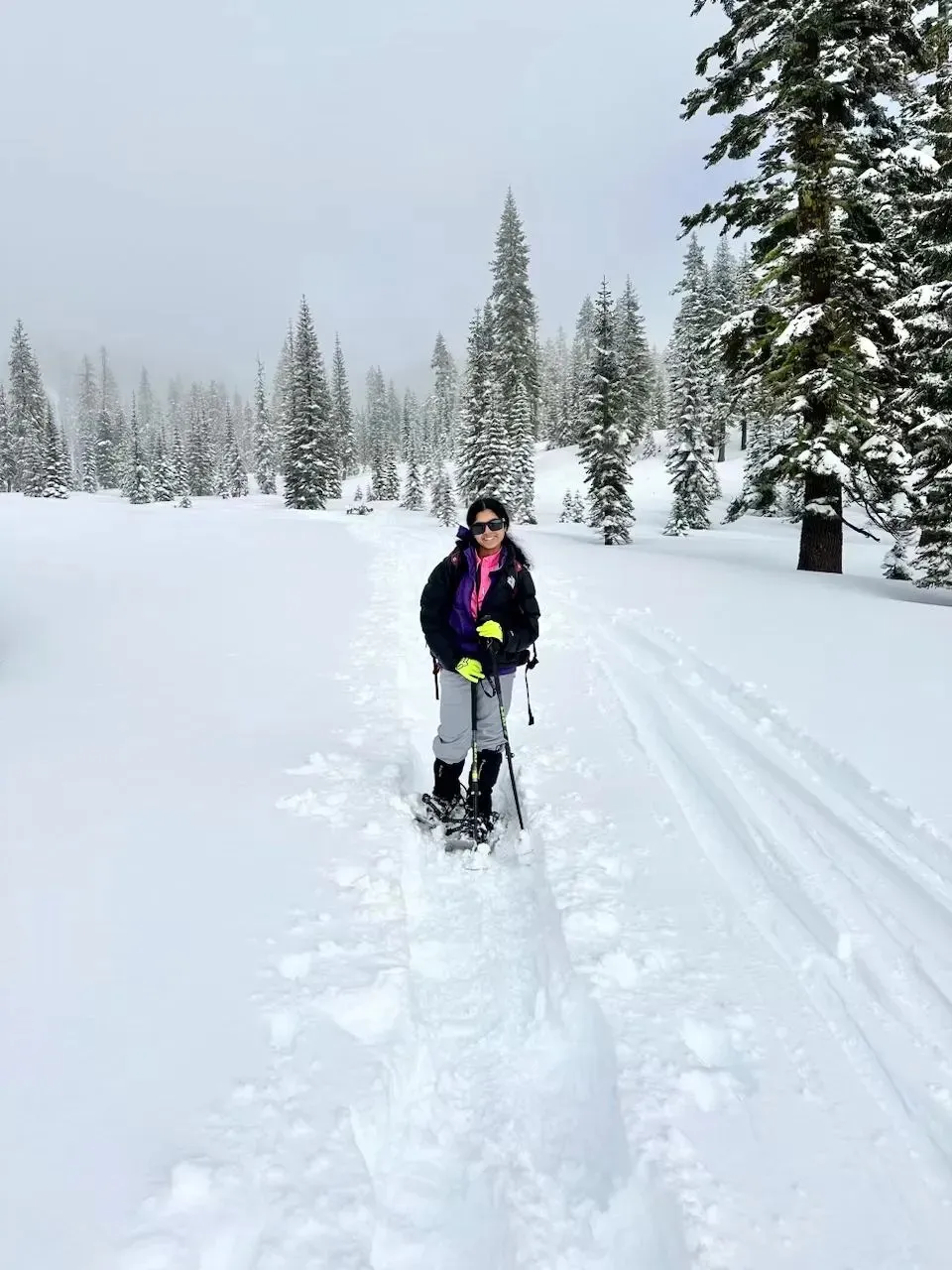
We first practiced how to properly use a beacon. Caleb had us practice turning the beacon on and off and following the flux lines indicated on the beacon. To make it more realistic, Caleb even buried several other beacons under the snow and had us try and locate them.
We then moved on to using probes and shovels. Caleb taught us several probing techniques as well as when and how to use each one to effectively scour through a given area. Avalanche probes are long and collapsible metal rods which are used to help to explore and probe through snow and other debris to help pinpoint and eventually retrieve a buried victim once their general area has been found with the help of a beacon. Like a beacon, avalanche probes are standard equipment for many people who spend lots of time in the wilderness.
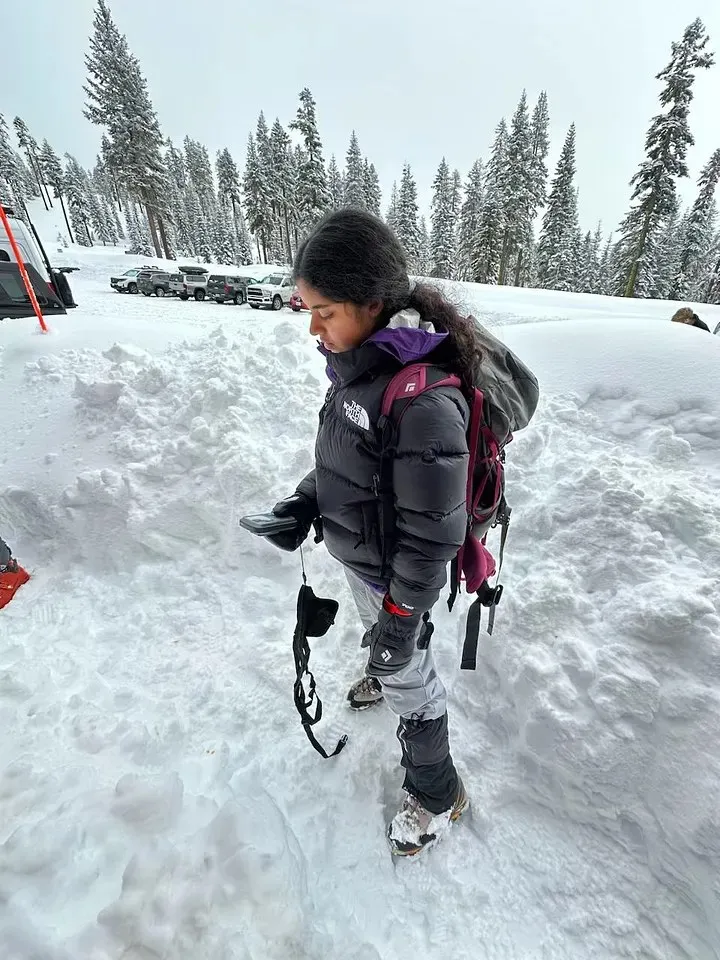
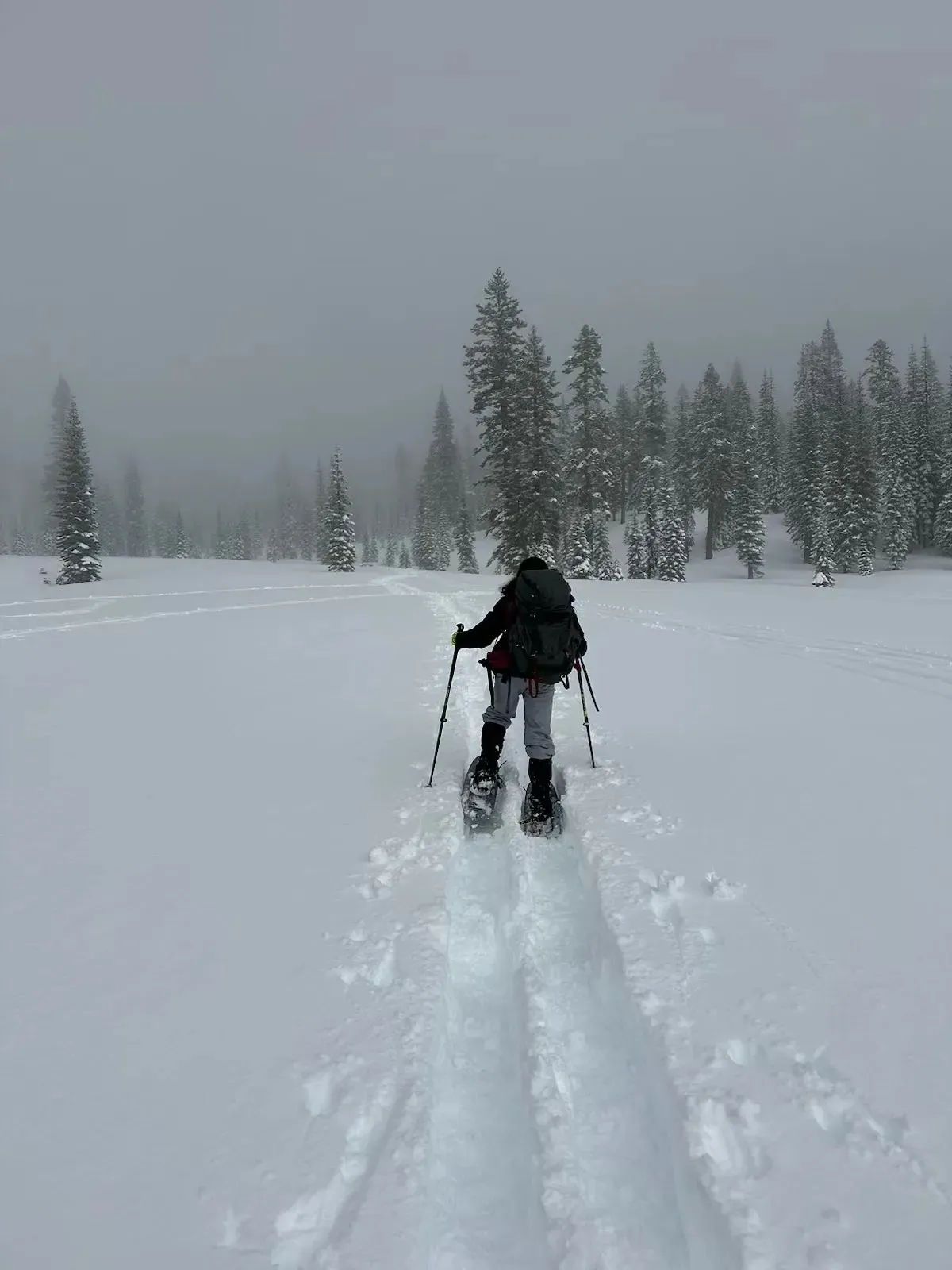 Here’s me walking through the snow, practicing using a beacon.
Our last exercise of the day was a challenge designed by Caleb to replicate a real-life avalanche rescue as closely as possible. In this exercise, we were required to use all the skills and knowledge we had learned over the eight hour clinic. Caleb started by burying two beacons, deep into the snow, (one for my Dad, and one for me). We were then timed to see how long it would take for us to save the “victim.”
We started with the initial search with our beacons, to eventually getting close enough to the buried beacon to start probing the area. Once we were confident we had found the “victim,” we began digging out the “victim” with shovels. Throughout this, Caleb observed us and once we finished, provided feedback. This scenario forced us to think on our feet, and apply what we had learned in a “real-life” situation. While it may not seem like it, all of this was extremely exhausting work.
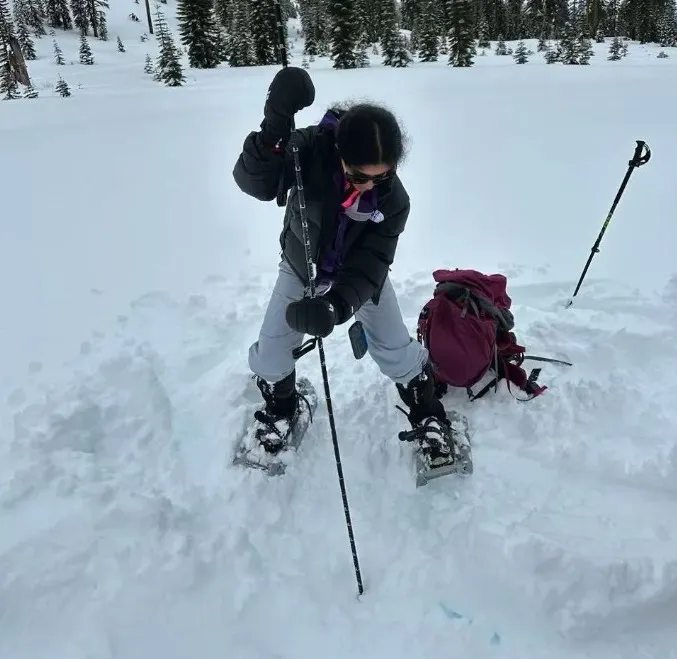 Here’s me trying to probe as quickly as possible in order to rescue our “victim” in time.
My record was approximately twelve minutes, which is a whole three minutes short of the fifteen-minute mark. This mark is extremely critical as if someone is buried but extracted within fifteen minutes, they have around a 90% chance of survival. After this, however, their chances slowly drop to around 35%. Therefore, this exercise also emphasized the importance of quick-thinking and speed in a real avalanche situation.
The two days my Dad and I spent in Mount Shasta were extremely rewarding and certainly experiences I will always remember. As I spend more time in the mountains, which includes snowy terrains, I will certainly need to use what I learnt about ice-climbing with Beck very frequently. More importantly, however, while I hope that I, or anyone else, will never face a dangerous situation (like an avalanche), it is good to be prepared and know the basics if the situation calls for it. I’m happy to say that I am AA1 Level 1 Avalanche Rescue certified!
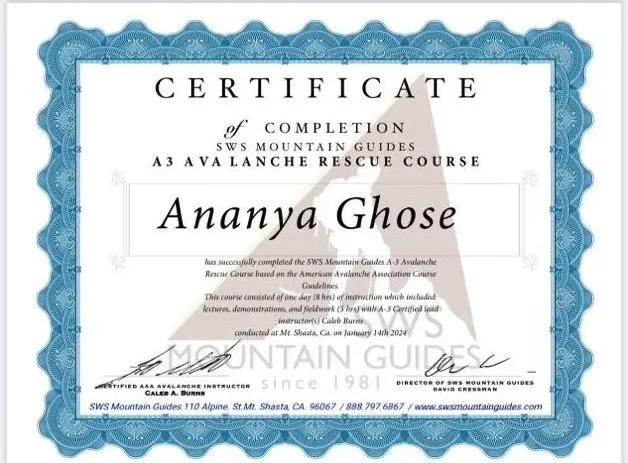 My certificate!